TonicNest may earn a commission if you buy through links on this page, at no extra cost to you. That does not change what we report.
Part of our Ikaria Lean Belly Juice overview. Last checked October 19, 2026.
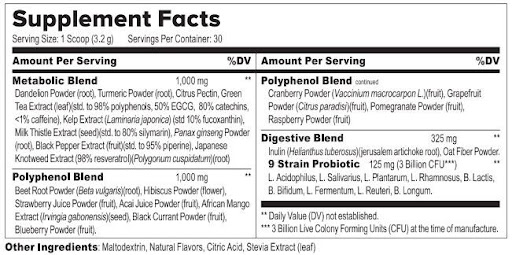
Ikaria Lean Belly Juice ingredients side effects are likely to be mild for most healthy adults, mainly gas or bloating, but five ingredients can change how medicines work. The label lists grapefruit powder, piperine, panax ginseng, turmeric and green tea extract, and hides the dose of every one.[1] We found no reports under "lean belly juice" in the FDA adverse event database (CAERS) and no recalls in openFDA, checked October 19, 2026.
Is Ikaria Lean Belly Juice safe? Safety at a glance
The biggest caution is drug interactions. Grapefruit and piperine can both slow a liver and gut enzyme called CYP3A4, which clears many prescription drugs, and the amounts here are unknown.[2]
For a healthy adult on no medicines, the formula is a mix of food powders, plant extracts, fiber and probiotics. The vendor says it is made in the USA in an FDA-registered facility that follows GMP. Registration is not approval, the facility is not named, and no third-party test results are published.[3]
Some safety checks remain open. FDA warning letters and FTC actions were NOT checked, and Trustpilot and the BBB complaint count were NOT checked because the pages were blocked. An empty adverse event search also does not mean no one has had a reaction, since most reactions to supplements are never reported.
No safety trial of this product exists. Safety notes below come from studies of the single ingredients, so the real-world picture for the mix is not established.
What side effects are possible?
Possible side effects fall into three groups: digestive upset, sensitivity reactions and medicine-related effects. Each comes from research on single ingredients, not on this product.
Digestive
Inulin and citrus pectin can cause gas and bloating, mostly at gram-level intakes.[4] Probiotics can cause mild stomach effects in healthy people. Beet root can turn urine red, which is harmless. Pomegranate extract caused diarrhea at 3 g a day in one study.[5]
Sensitivity
Green tea extract contains under 1% caffeine, which may matter if you are sensitive to it. Panax ginseng can cause trouble sleeping. Dandelion and milk thistle can cause allergy in people sensitive to ragweed, and citrus pectin has rare anaphylaxis reports in people with cashew or pistachio allergy.[6]
Medicine-related
Piperine raised blood levels of propranolol and theophylline in a study.[7] Ginseng, milk thistle and African mango may lower blood sugar, which matters with diabetes drugs.
Which ingredients deserve extra attention?
Six ingredients carry most of the safety questions. None has a disclosed amount on the label, so the size of any risk cannot be estimated.
| Ingredient | Safety issue | Why it matters |
|---|---|---|
| Grapefruit powder | Furanocoumarins block gut CYP3A4 | Can raise levels of some statins, blood pressure and heart rhythm drugs |
| Black pepper extract (piperine) | Inhibits CYP3A4 and P-gp | Raised propranolol and theophylline levels[7] |
| Turmeric | Liver injury tied to high-absorption forms, including with piperine[8] | This formula pairs the two |
| Green tea extract | Uncommon liver injury from extracts; can raise blood pressure | Extract dose hidden |
| Panax ginseng | May affect blood clotting and blood sugar | Matters with blood thinners and diabetes drugs |
| Kelp extract | Iodine content not stated | Matters with thyroid disease and levothyroxine |
Our ingredient breakdown covers the rest of the label.
Which medicines could interact?
Take this list to a pharmacist with the label. It names groups to ask about, and it is not a complete list of every possible interaction.
- Drugs cleared by CYP3A4, including some statins, calcium channel blockers, heart rhythm drugs, immunosuppressants and anxiety medicines (grapefruit, piperine)
- Propranolol and theophylline (piperine)[7]
- Blood thinners (panax ginseng)
- Diabetes medicines (ginseng, milk thistle, African mango)
- Nadolol, atorvastatin and raloxifene (green tea extract)
- Blood pressure drugs, nitrates and PDE5 inhibitors (beet root)
- Levothyroxine (kelp iodine)
Interactions marked here come from ingredient studies. Where our files say none were sourced, that means none were read, and it does not mean none exist. Because the doses are hidden, a pharmacist can only judge the risk from the ingredient names, so bring the full label and your current medicine list to the visit.
If your pharmacist clears it, the 180-day refund gives you room to stop if it does not suit you.
Pregnancy, breastfeeding and who should ask a doctor first
We found no safety data for this formula in pregnancy or breastfeeding, so skip it unless your doctor says otherwise. Ask a doctor before the first scoop if you:
- Are pregnant, breastfeeding or trying to conceive
- Take any prescription medicine
- Have liver disease or a history of raised liver enzymes
- Have diabetes, a thyroid condition or a bleeding disorder
- Have a weakened immune system or a serious illness (probiotics)
- Have surgery planned
- Are under 18
Which symptoms need a doctor right away?
Stop the powder and see a doctor right away if you notice:
- Yellow skin or eyes, dark urine or pain under the right ribs
- Swelling of the lips, tongue or throat, hives or trouble breathing
- Chest pain, a racing heartbeat or fainting
- Unusual bruising or bleeding
- Shakiness, sweating or confusion if you take diabetes medicine
- Severe or bloody diarrhea
Tell your doctor about any suspected reaction, then the vendor support line at (863) 591-4284.
Safety conclusion
For a healthy adult on no medicines, Ikaria Lean Belly Juice is mostly food powders and fibers, and digestive upset is the likely side effect. For anyone on prescription drugs, the hidden amounts of grapefruit, piperine, ginseng and turmeric make a pharmacist check the first step. Three habits lower the risk for everyone: take one scoop only, as directed; keep other green tea and caffeine products modest; and stop at the first sign of a reaction. If you stop early, the 180-day refund still applies from the ship date, as long as you return every jar, empty or unopened. Read how to take it and what the evidence shows before you decide.
Back to the Ikaria Lean Belly Juice overview.
Frequently asked questions
Can Ikaria Lean Belly Juice cause diarrhea or bloating?
It can. Inulin and citrus pectin are fibers that cause gas and bloating in some people, and probiotics can cause mild stomach upset. Pomegranate extract caused diarrhea at 3 g a day in one study. The amounts in this scoop are hidden.
Can I take Ikaria Lean Belly Juice with blood pressure medication?
Ask a pharmacist first. Grapefruit and piperine can raise levels of some calcium channel blockers and other drugs cleared by CYP3A4, and beet root can add to blood pressure lowering. Bring the Supplement Facts label with you.
Is Ikaria Lean Belly Juice bad for your liver?
No liver problem has been tied to this product in the FDA databases we searched. Green tea extract and turmeric taken with piperine have both been linked to uncommon liver injury, so people with liver disease should ask a doctor first.
Does Ikaria Lean Belly Juice keep you awake?
It might for some people. The green tea extract contains under 1% caffeine, and panax ginseng can cause trouble sleeping. Taking it in the morning, as the label directs, and limiting other caffeine may help.
Is Ikaria Lean Belly Juice safe during pregnancy?
We found no safety data for this formula in pregnancy or breastfeeding. It contains ginseng, grapefruit, piperine and kelp at hidden doses. Skip it unless your doctor has checked the label and says otherwise.
Sources
- Ikaria Lean Belly Juice Supplement Facts panel. theikariajuice.com, read October 19, 2026.
- Grapefruit and drug metabolism (PMID 9723817). PubMed, National Library of Medicine, read October 2026.
- Ikaria Lean Belly Juice sales page and FAQ. theikariajuice.com, read October 19, 2026.
- Pectin and acacia gum fiber trial (PMID 20584565). PubMed, National Library of Medicine, read October 2026.
- Pomegranate extract dose study (PMID 22689129). PubMed, National Library of Medicine, read October 2026.
- Pectin anaphylaxis with cashew and pistachio allergy (PMID 42622389). PubMed, National Library of Medicine, read October 2026.
- Piperine and blood levels of propranolol and theophylline (PMID 1815977). PubMed, National Library of Medicine, read October 2026.
- Turmeric-associated liver injury case series (PMID 32656820). PubMed, National Library of Medicine, read October 2026.
This page is general information, not medical advice. Dietary supplements are not reviewed by the FDA for safety or effectiveness before they are sold and are not intended to diagnose, treat, cure or prevent any disease. Talk to your doctor before taking any supplement, especially if you are pregnant, nursing, take medication or have a health condition.